In a shop, physical or online, most of the team’s time goes on answering the same questions, updating product pages, checking stock and chasing orders. Artificial intelligence takes care of that repetitive work so you can focus on what grows the business: the product, your suppliers and your customers.
1. Customer service around the clock
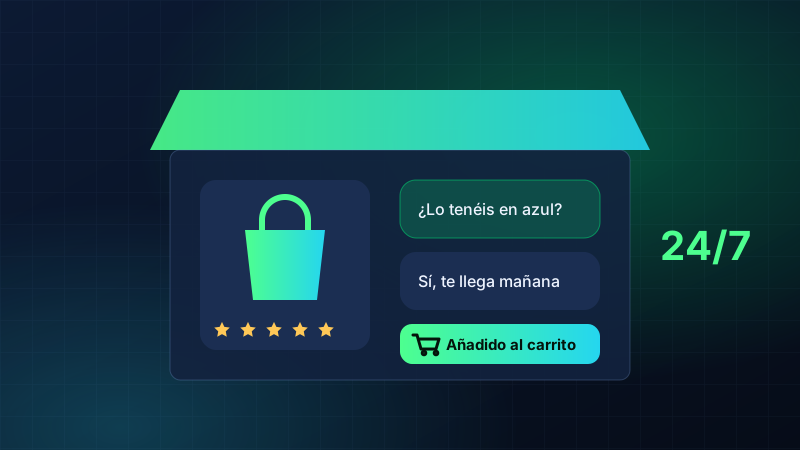
“When will it arrive?”, “Do you have this size?”, “How do I return something?”. An assistant on your website, on WhatsApp or on Instagram answers instantly with your shop’s real information: catalogue, stock, delivery times and returns policy. When the customer needs something more, it hands the conversation over to a team member with all the context.
2. Recommendations that raise the average order value
AI analyses what each customer looks at and buys to suggest complementary products: the charger that goes with the phone, the case that matches the bag. Done well, recommendations don’t annoy: they help people decide and raise the average value of each purchase.
3. Product pages in minutes
Writing descriptions, titles and copy for hundreds of products is an endless task. An AI agent generates drafts in your brand’s tone with each item’s technical information, ready to review and publish. It can also adapt them for each channel: online shop, marketplace or social media.
4. Stock under control
Automatic alerts when a product is about to run out, restocking orders suggested according to the pace of sales, and demand forecasts for campaigns such as Christmas or the sales. Fewer stock-outs and less money tied up in products that don’t sell.
5. Orders and after-sales that run themselves
Order confirmation, shipping notice, tracking, incidents and a review request after delivery: everything is sent at the right moment without anyone having to do it by hand. The customer stays informed and your team gets fewer calls asking where their parcel is.
6. Recovering abandoned carts
Many purchases stop halfway. A personalised reminder, sent a few hours later with the product the customer left in the cart, recovers part of those sales. AI helps choose the timing and message that work best with each customer.
7. Listening to what your customers say
Reviews, messages and social media comments contain very valuable information. AI analyses them and sums up what people like, what bothers them and which products generate the most questions or returns. In projects such as Topciment we have applied this kind of AI text and image analysis to turn scattered information into decisions.
What to keep in mind
- Say that it is an AI. The EU Artificial Intelligence Act requires you to inform customers when they are talking to an automated assistant (Article 50).
- Respect permissions for commercial communications. Cart reminders and email campaigns require consent or a prior relationship with the customer, in line with the GDPR and the Spanish Information Society Services Act (LSSI).
- Review what it publishes. Product pages and copy generated with AI must go through human review: product data has to be accurate, because it is part of the information you give the consumer.
If you want to go deeper into the legal side, our guide to the EU AI Act explains it in detail.
Where to start
In most shops, the first step with the biggest impact is customer service: you notice it from day one and it frees up time for everything else. Order tracking and product pages come next.
Want to put numbers on it? In our savings calculator you choose “Retail”, enter your team size and instantly see how much time and money you could win back.
Want to apply AI in your shop?
We carry out a free audit and tell you where to start to sell more with the same team.
Get your free audit →